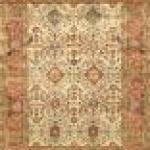
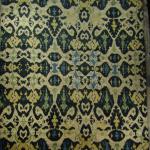
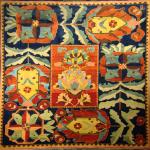
Mahals The Mahal style gets its name from a village in Western Iran. It's in the Arak district, famous for weaving rugs for centuries. Although Mahal designs come in many different configurations, the most characteristic Mahal is probably going to have an all-over pattern in the rug's field. Medallions are rare.
Pets and Rugs Dogs and cats are beloved members of the household. But what about accidents on your beloved rug?
Mamluks

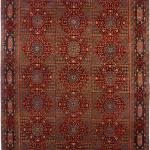
Mamluk rugs are named for an elite military caste that started in the Middle East around the 9th Century. Recruits were bought  as slaves by sultans when pre-pubescent young men and subjected to rigorous military training. Their ranks quickly became the elite of the sultan's armies.

In 1250 the Mamluks took over the Sultanate in Syria/Egypt and the following year defeated the Mongols. They were also instrumental in defeating the Crusaders.

The Mamluks ruled until over-run by the Ottaman Turks in 1517, but continued to be influential in Egypt.

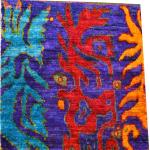
Ikats Intricate and awe-inspiring weaving and dying technique produce a pattern that has attracted buyers for over 1,000 years. Interestingly, the ikat technique seems to have developed on its own in such far flung places as Malaysia and Central America.
Donegals

In 1898 Scottish textile manufacturer Alexander Morton formulated a concept: set up a rug weaving business in the West that used the time-tested, hand-knotting techniques of the East, but employed exciting new design concepts in keeping with La Belle Epoch creativity and other current design trends. It also claims lineage from the late 19th Century Arts and Crafts Movement which favored traditional British design opposed to  neo-classicism in Britain and America.

He began operations in the town of Killybegs on the west coast of Ireland, County Donegal.

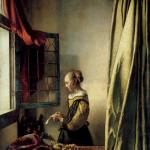
Interior Design in 1657

We moderns enjoy thousands of years of art and decor history. Sometimes when you are out of ideas, the best place to turn is to the taste-setters of the past. You know you have a rich source if work endures down through the ages.

Fashion Show at A/D After hours of preparation in the Center's Outdoor Artifact Garden, the fashion show had to be quickly moved into the Addison/Dicus showroom. All was not lost. In fact it turned out to be a great event.
Why Oushaks? Traditionally weavers in Turkey used left over wool to spin a thick, tough yarn. They used it to weave rugs called Oushaks which they marketed to anyone who could afford them.
10 Tips to Spur Creativity In the New York Times, Jonah Leher posted an article as a preview of his upcoming book exploring the the mysteries of creativity. He lists the below 10 suggestions to get the muse back on your side.